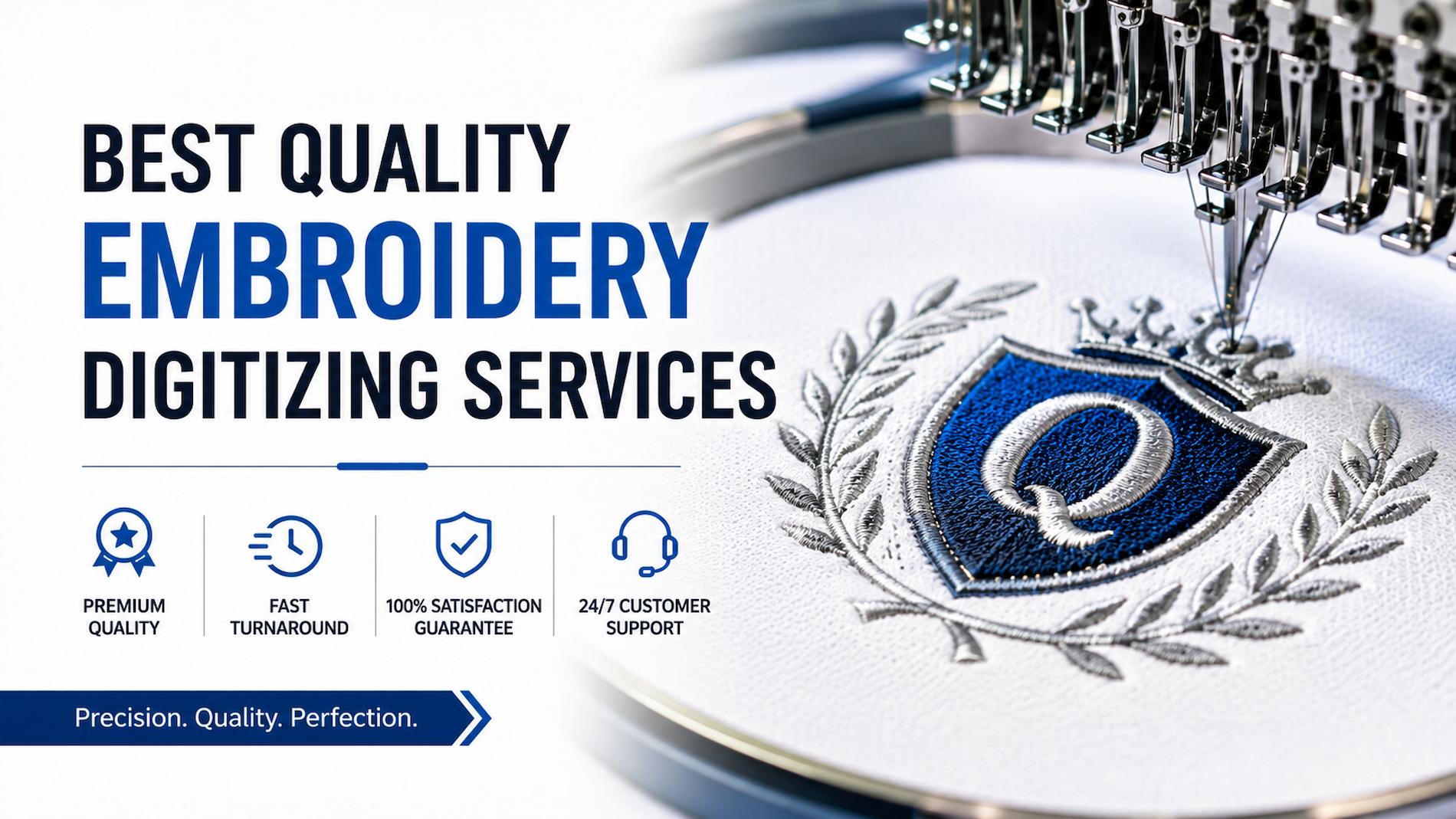
Finding reliable embroidery digitizing services can transform how your designs perform on fabric. Superior digitizing means fewer thread breaks, better fabric handling, and professional results every time. This comparison examines five providers based on technical strengths like precision stitching, file support, and real-world performance to help you choose wisely for your projects.
The Best Embroidery Digitizing Services for Clean, Professional Stitching
Embroidery digitizing converts artwork into stitch instructions that machines can read and execute. Stitch quality stands out as the single most important factor because it directly affects the final appearance, durability, and production efficiency of embroidered items. Poor digitizing leads to puckering, thread breaks, uneven coverage, and wasted materials, while expert work delivers smooth runs and crisp details.
Best Quality Embroidery Digitizing Services focus on technical details such as proper underlay, pull compensation, and density control rather than just low prices. This article compares five providers using objective criteria drawn from their official offerings, supported formats, and documented capabilities. Whether you need left chest logo digitizing, jacket back digitizing, or cap embroidery digitizing, understanding these differences helps you select the right partner.
Selection Criteria
Each service earns evaluation on consistent standards that matter for production:
- Stitch quality and precision of stitch paths
- Small lettering capability and complex logo handling
- Stitch density optimization, underlay planning, and pull compensation
- Machine efficiency and fabric adaptability
- File compatibility and production readiness
- Revision policy, turnaround time, and customer support
- Quality assurance processes
These factors ensure the comparison stays grounded in practical performance.
Company Overviews
Megri Digitizing
Megri Digitizing Established around 1999 with over 20-25 years of experience, this US-owned company operates globally with offices in the US and the UK. It serves fashion, apparel, promotional products, corporate branding, sports teams, and more. Primary services include 3D puff embroidery digitizing, applique digitizing services, logo digitizing, patchwork, and specialized items like chenille and sequin. It emphasizes fast turnaround, high precision, and broad format support. You can directly order here.
Embroidery Digitizing
Embroidery Digitizing Active since around 2007 (with roots to 1989), this provider focuses on quality custom work and shares industry knowledge through its blog. It targets embroiderers and businesses needing reliable digitizing with attention to detail and efficiency.
Embroiderydigitizing.work
Embroiderydigitizing.work – With several years of experience and roots in textile expertise, this service offers affordable, high-quality digitizing for logos, patches, and various garments. It serves clients worldwide, including the US, UK, Canada, and beyond, with a focus on timely delivery and testing designs on machines before sending.
Ashish Softech
Ashish Softech is a specialized digitizing company with years of hands-on experience. It operates with professional digitizers working around the clock. Pricing centers on stitch count ($0.75 per 1000 stitches standard), with low minimums for items like hats. It accepts a wide array of input and output formats and stresses quality for various fabrics.
Infinum Digitizing
Infinum Digitizing – A US/California-based provider emphasizing quick turnaround and quality at competitive rates. It handles everything from left chest corporate logos to large custom applications, focusing on personalized client relationships and broad promotional product support.
Stitch Quality Comparison
All providers aim for smooth, consistent stitches, but approaches vary. Megri Digitizing highlights advanced techniques that reduce thread breaks and jump stitches while maintaining clean satin borders and balanced density. Ashish Softech and Embroiderydigitizing.work emphasizes machine testing for real-world consistency. Embroidery Digitizing and Infinum focus on efficiency for production runs. Overall, strong underlay and compensation separate reliable services in reducing puckering across fabrics.
Expert digitizers pay close attention to stitch direction optimization and registration accuracy, which helps maintain alignment across multiple colors and reduces visible gaps or overlaps. Services such as Megri Digitizing stand out by using techniques that minimize jump stitches and unnecessary trims, leading to cleaner production runs and less post-processing work for embroiderers. This level of detail becomes especially valuable for high-volume orders where consistency across hundreds of pieces can make or break profitability.
Small Lettering Performance
Small lettering demands tight column widths, effective pull compensation, and careful sequencing. Providers like Megri Digitizing and Ashish Softech report strong results on lightweight fabrics when clients provide clear instructions. Minimum heights depend on font and fabric, but expert services manage readability down to challenging sizes through precise satin columns.
On lightweight or stretchy fabrics, effective embroidery stitch optimization prevents common issues like fabric puckering around delicate text. Providers that excel here combine narrow column management with strategic sequencing, ensuring letters remain crisp and legible even at small scales. Testing on actual garments further validates performance, giving clients confidence before committing to larger production.
Complex Logo Digitizing
For intricate artwork with gradients, fine details, and multiple objects, digitizers must optimize color changes, outlines, and registration. Megri Digitizing, Embroidery Digitizing, and Infinum stand out for handling multi-layer sequencing and sharp corners, while others excel with clear client guidance on priorities.
Satin Stitch vs Fill Stitch Quality
Satin stitches shine on borders and text with smooth angles and consistent width. Fill stitches require balanced density and direction to avoid distortion. Leading services optimize both for clean results, satin for elegant edges, and fill for solid coverage, reducing trims and improving efficiency.
Appliqué Digitizing
Services offering applique digitizing services manage placement, tack-down, and cover stitches with good registration. Megri Digitizing explicitly lists this as a specialty, recommending suitable fabrics for layered effects. Others provide it upon request with strong sequencing.
Supported File Formats and Machine Compatibility
Common formats include:
- DST file digitizing (Tajima, widely compatible)
- PES embroidery files (Brother/Baby Lock)
- EXP (Melco/Bernina), JEF (Janome), VP3 (Husqvarna/Pfaff), XXX, HUS, and more.
Megri and Ashish support extensive lists (DST, PES, EXP, JEF, VP3, EMB, etc.), delivering machine-ready embroidery files. Editable formats like EMB suit further tweaks. Most work with Tajima, Barudan, Brother, Janome, Ricoma, Melco, SWF, Happy, and similar machines.
Artwork File Acceptance
Providers typically accept AI, EPS, SVG, PDF, CDR, PSD, PNG, JPG, TIFF, and even hand sketches. Clear, high-resolution inputs yield the best embroidery stitch optimization.
Technical Quality Assurance and Revision Policy
Many offer manual checks, stitch simulations, and free or low-cost revisions. Megri provides unlimited free edits in many cases, while Ashish offers free minor changes. Rush services and 24/7 support appear across top options.
Turnaround Time
Standard times range from hours to 24 hours, with rush options common. Megri Digitizing often delivers in 4-6 hours for simpler designs. Bulk orders receive scaled timelines.
Comparison Table
| Metric | Megri Digitizing | Embroidery Digitizing | Embroiderydigitizing.work | Ashish Softech | Infinum Digitizing |
|---|---|---|---|---|---|
| Stitch Quality | High precision, reduced breaks | Strong detail focus | Machine-tested consistency | Exquisite results | Efficient production |
| Small Lettering | Excellent compensation | Good readability | Solid performance | Good readability | Reliable |
| Complex Logos | Superior sequencing | Detailed handling | Custom capable | Strong | Large applications |
| Satin & Fill Stitch | Smooth & balanced | Clean execution | Clean execution | Precise | Efficient coverage |
| Appliqué | Specialty service | Available | Supported | Upon request | Strong layering |
| File Formats | Multiple – Broad (DST, PES, EMB+) |
Standard + more | Multiple | Extensive list | Machine-ready |
| Machine Compatibility | Very wide range | Major brands | Excellent | Excellent | Commercial focus |
| Turnaround | 4-6 hours typical | Fast | Fast | Fast | Depends upon design |
| Revisions | Free / Unlimited often | Free | Free | Free | Client-oriented |
Best Service by Use Case
- Small lettering or left chest logo digitizing: Megri or Ashish for precise control.
- Corporate logos or promotional products: Infinum or Megri for branding accuracy.
- Sportswear or cap embroidery digitizing: Services with 3D puff and fabric adaptability, like Megri.
- Jacket back digitizing or high-volume: Providers handling large designs efficiently, such as Ashish or Infinum.
- Patch manufacturers or fashion brands: Look for appliqué and complex handling strengths.
- Uniform suppliers: Broad compatibility and fast revisions matter most.
Base your choice on specific project needs and test with a small order.
For 3D puff embroidery digitizing or fashion-forward projects, look for teams experienced with foam effects and texture layering. Meanwhile, patch and appliqué specialists shine when precise material recommendations pair with accurate layer sequencing, delivering durable results that hold up through repeated washing and wear. Always verify current capabilities directly with the provider for your specific materials and machine setup.
Choosing Excellence
The right quality digitizing services or professional embroidery digitizing partner elevates your entire workflow. Focus on technical fit, compatibility, and proven results rather than price alone. Test samples, review portfolios, and communicate clearly about fabrics and machines for the best outcomes in custom logo digitizing and beyond. Your embroidered products will reflect the care invested in the digitizing stage.
Frequently Asked Questions (FAQs)
What determines embroidery stitch quality?
Proper underlay, density balancing, pull compensation, and stitch direction all play key roles in smoothness and durability.
Which file format is best for commercial embroidery?
DST offers wide compatibility; PES suits Brother machines. Choose based on your equipment.
What is the difference between DST and EMB files?
DST is a common machine-ready format. EMB (Wilcom) is often editable in software before final export.
Why does pull compensation matter?
It adjusts for fabric stretch and thread pull to maintain shape and prevent distortion.
When should satin stitches be used instead of fill stitches?
Use satin for borders, text, and narrow areas; fill for larger solid regions needing coverage.
Which machine formats are most widely supported?
DST and PES lead for broad use across Tajima, Brother, and many others.