Your heat pump is making a strange noise. Or the house feels chilly, even though the system is running. Now you face a tricky question: fix it or replace it?
It is not always obvious. Cedar Rapids winters are harsh, and summers can be muggy. Your heat pump works hard all year. This guide helps you weigh up the choice with confidence.
How Long Should a Heat Pump Last?
Most heat pumps last 10 to 15 years with proper care. Some go longer. Others struggle sooner, especially if they have skipped regular servicing.
Knowing your system’s age helps you plan ahead. Sound advice on heat pump installation and repair in Cedar Rapids, IA always starts with an honest look at your unit’s age, condition and repair history. Age is a useful starting point, but it is not the whole story. Running costs matter too.
Signs Your Heat Pump Can Be Repaired
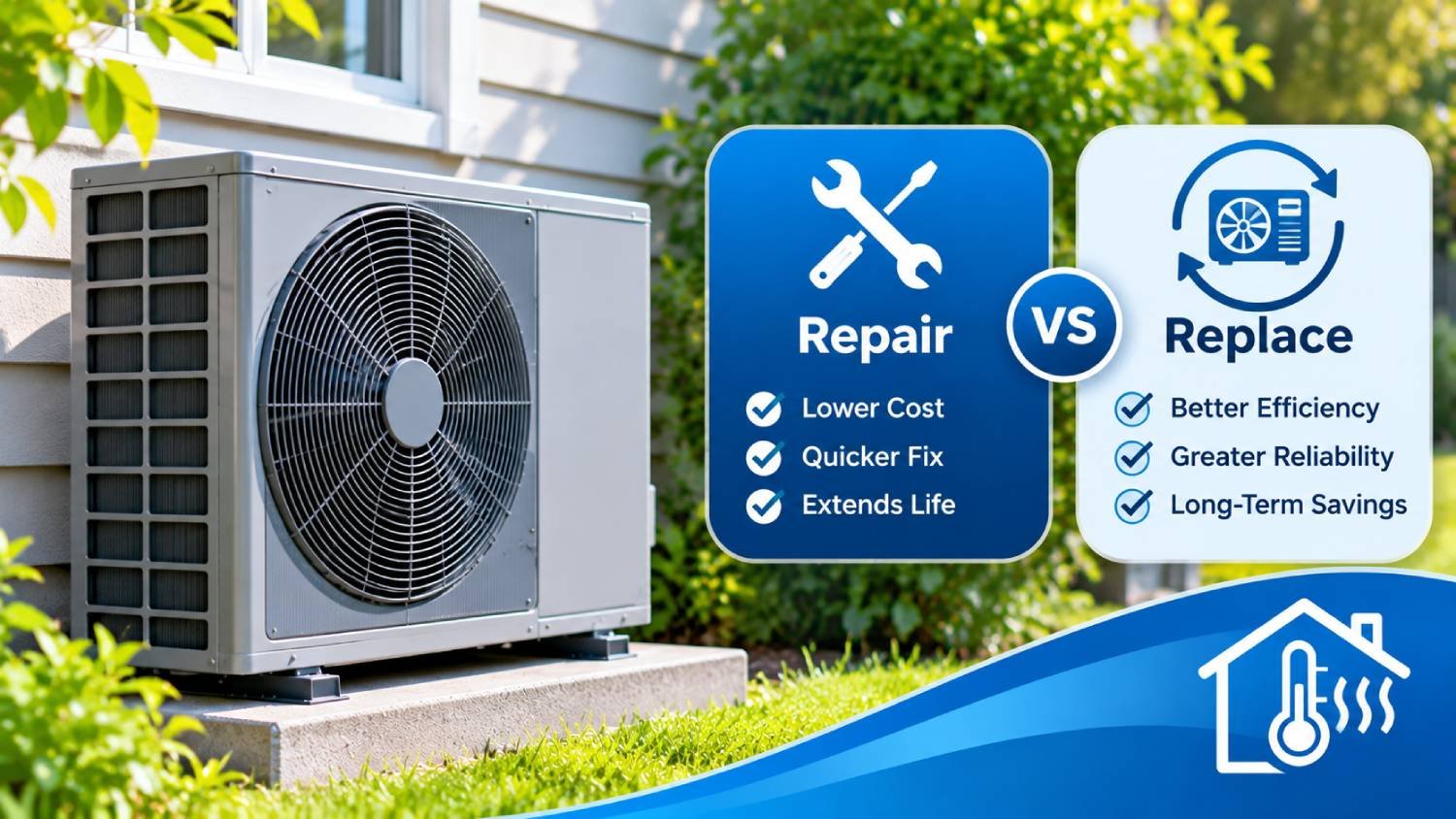
Many faults are small and affordable to put right. Repair usually makes sense when:
- The unit is under ten years old
- The problem is a single, isolated fault
- The system has been serviced regularly
- Energy bills have stayed steady
- A part is still under warranty
Common fixable issues include a faulty thermostat, a worn capacitor, a dirty coil, a failed fan motor or low refrigerant caused by a minor leak.
Signs It Is Time to Replace
Some problems point to a system that is simply worn out. Think about replacement if:
- The unit is over 12 to 15 years old
- Repairs keep recurring
- Your energy bills are climbing for no clear reason
- Rooms heat or cool unevenly
- The compressor has failed
- The system uses outdated R-22 refrigerant, which is now phased out and costly
The compressor is the heart of your heat pump. Replacing it often costs nearly as much as a new system. In that case, repair rarely pays off.
A Simple Rule of Thumb
Many technicians use the “5,000 rule”. Multiply the unit’s age by the repair cost. If the answer is above 5,000, replacement is usually the smarter move.
For example, a 12-year-old unit with a 500 dollar repair scores 6,000. That points towards replacing it. It is only a guide, not a law. But it gives you a handy sense check.
Weighing Up the True Costs
Do not look at the repair bill alone. Consider the bigger picture.
Repair Costs
Repairs cost less upfront. Yet an ageing system can keep throwing up new faults. Several call-outs in a year soon add up.
Replacement Costs
A new system costs more at the start. However, modern heat pumps are far more efficient. Cold-climate models also perform well in low temperatures, which suits Iowa winters.
Rebates and Incentives
Federal tax credits and utility rebates may reduce the cost of an energy-efficient upgrade. Check current eligibility before you commit, as schemes change.
Why Local Expertise Matters
Climate shapes how a heat pump performs. Freezing winters, icy conditions and high summer humidity all put strain on your system. A technician who understands local conditions will size and set up your equipment properly.
A good professional will inspect your system, explain the findings plainly and give you honest options. They should never pressure you into a sale.
What to Ask Your Technician
Before deciding, ask a few direct questions:
- What exactly is wrong, and why did it fail?
- How much life is left in the system?
- What will repairs cost compared with a new unit?
- Is the work covered by a warranty?
A reliable expert will answer clearly. If they cannot, get a second opinion.
Keeping Your Heat Pump Healthy
Whichever route you choose, regular care protects your investment.
- Book an annual service before winter
- Change or clean air filters every one to three months
- Keep the outdoor unit clear of snow, leaves and debris
Small habits prevent big breakdowns.
Conclusion
Repair or replace? There is no single answer. Look at the age of your unit, the type of fault, the repair cost and your energy bills. If the system is young and the fault is minor, repair is sensible. If it is old, unreliable and expensive to run, replacement will likely save you money and stress in the long run while ensuring consistent heating and comfortable living conditions throughout your home.
When in doubt, ask a qualified local technician for an honest assessment. A proper inspection gives you the facts, so you can choose with confidence and keep your home comfortable all year round.